Waterpark Simulator Troubleshooting: Find the Blocker Before You Expand
Use a four-way check for route, staffing, cleanliness and cash problems, then test one small change and verify the same signal.

What this page can help you diagnose
Use this page after you have a running park and something repeatedly feels wrong. It does not provide a universal best layout, staffing number, happiness threshold, salary, price or income formula. Those details are build-sensitive and need a dated source or a check in your own save.
The useful question is smaller: what signal repeats, where does it happen, and what is the least disruptive thing to test?
A 60-second four-way triage
Start with the same place and the same repeatable signal. Then choose one branch:
| If you notice… | Test this first | Do not assume |
|---|---|---|
| Guests clustering, wandering or failing to reach something | Follow the route from approach to next destination | That a new attraction fixes an access problem |
| Work accumulating in one zone | Compare the workload location with staff travel and coverage | That more staff everywhere is automatically the answer |
| A condition problem keeps returning in one area | Inspect the route, nearby support points and where work is being created | That decoration changes the operating cause |
| A purchase feels urgent but the park is not stabilising | Name the repeated friction the spend is meant to test | That spending more is evidence of progress |
Branch one: route and guest flow
Walk the guest journey yourself: approach, activity, support need, then onward movement. Look for a place where the journey stops being obvious. Make one small route or placement change, run the same area again, and compare the same signal. If the signal changes, keep the lesson. If it does not, undo or reclassify instead of layering another attraction over the problem.
Branch two: workload and staffing
Treat staffing as a workload question. Identify where the work is accumulating before changing assignments. A distant expansion can create travel and visibility problems even when the original loop was manageable. Change one coverage decision, then watch the same zone again.
Branch three: cleanliness and condition
Condition is a map clue. Trace where guests move, where support is needed and where staff must travel. The aim is not to claim a permanent cleaning setup; it is to make the problem visible enough to test one correction.
Branch four: cash and upgrades
Before a purchase, write one sentence: “This spend tests whether ___ is causing ___.” If you cannot name the signal you will compare afterwards, wait. Exact costs, income and unlock order are deliberately outside this page until they are current and sourced.
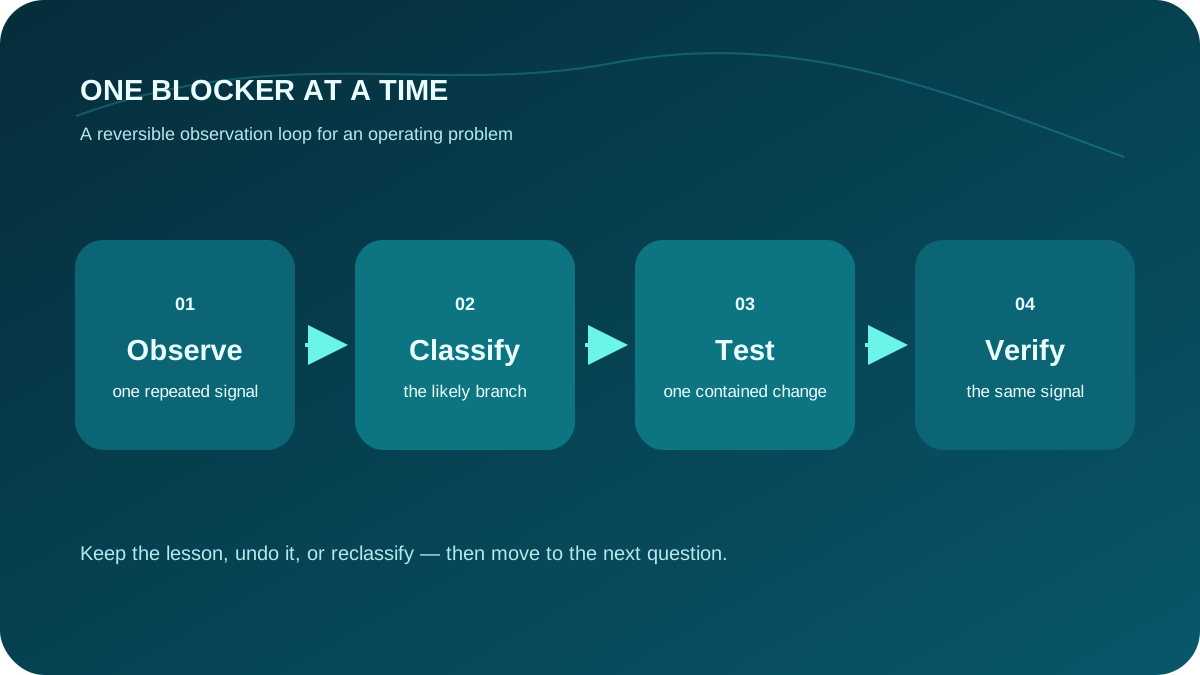
The smallest-test rule
- Observe one repeating signal.
- Pick one branch, not four theories at once.
- Make one reversible or contained change.
- Watch the same location and signal again.
- Keep, undo or reclassify before expanding.
If the cause is circulation or placement, continue with the Build route guide. If you are still creating the first operating loop, return to First Park. If the question is an exact setting or co-op state, use the relevant candidate reference only when its evidence status says it is verified.
Next action
Choose one place in your park. Name its repeated signal and run one smallest test before you add another object.